
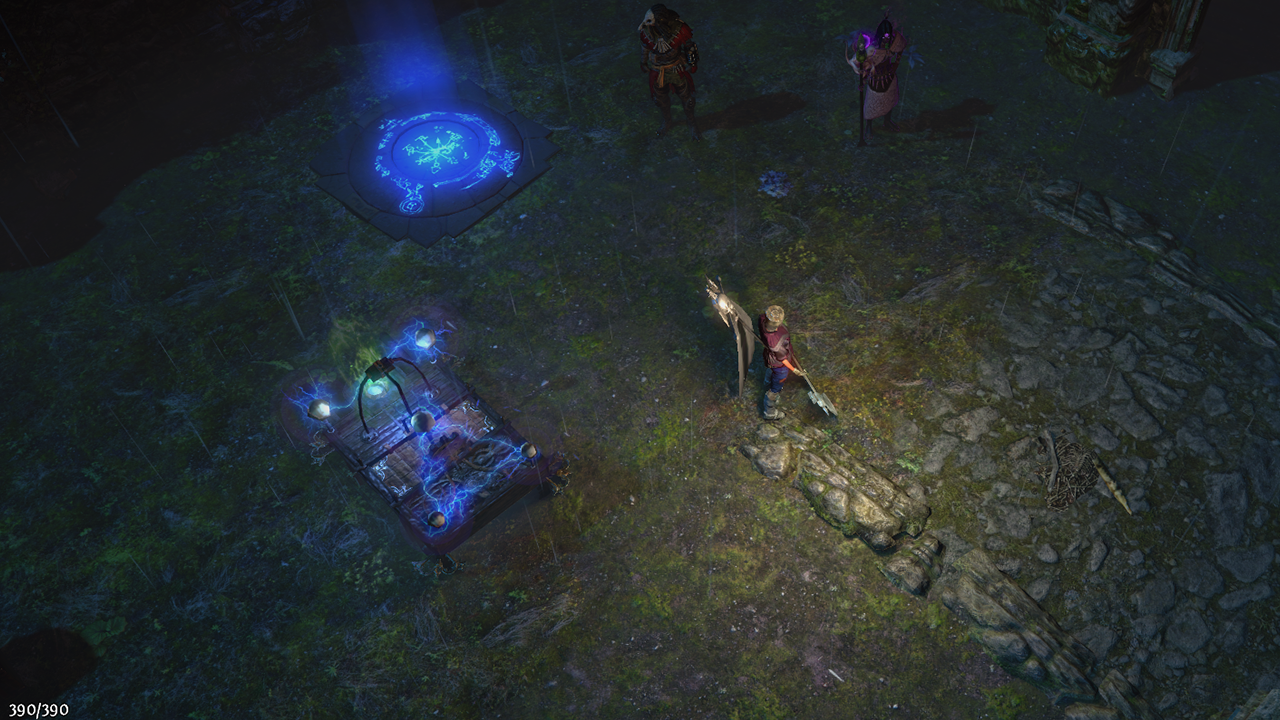
Craft to Exile offers a number of advanced crafting options, allowing players to create builds which are not possible through normal gameplay. Examples include crafting guaranteed uniques and finding rare mods like a Lava Caller prefix or an Attack Modifier. Item level is crucial for crafting as it dictates the pool of potential modifiers which can roll on an item. Catalysts are a great way to improve crafted items and they can also target specific modifiers for exaltation or annulment.
Crafting
The crafting system in Path of Exile is a huge and complex one, with many ways to improve or create items. The process involves modifying or improving an item through the addition, removal or alteration of various modifiers, with careful selection and combination being important to achieve desired outcomes. The quality of an item also has a significant impact, with higher-quality items often having better physical damage or defensive characteristics than lower-quality items. The first step in crafting is to acquire a suitable base item. These can be found in the game’s auction house or purchased from other players using currency. Once the base item has been acquired, it must be put into the Crafting Bench to be upgraded. Each upgrade increases the item’s quality by one level, with some upgrades providing additional modifiers that can be applied to the base item.
Once the base item is upgraded, it can be refined into a high-quality version of itself. This is done by combining it with other items and currency, such as the Regal Orb. Regal Orbs allow for the addition of three prefixes and suffixes to a base item, and can be used on helmets, body armour, gloves, belts, rings, amulets and weapons. Fossil crafting is another valuable tool in the crafting system, allowing players to re-roll base items with an increased chance of specific mods being added. This can be particularly useful on items that need to be reforged, as it can help to avoid losing valuable mods when reforging. Fossil crafting can be expensive, however, as each fossil has a set of tags that influence the pool of available modifiers.
Experimenting with different combinations of items and currency can result in some incredibly powerful equipment, allowing players to push their builds to the limit. Some of these builds are even unique, requiring rare runewords and items to obtain, such as the Stone of Jordan ring or the legendary Headhunter unique weapon. Metacrafting is a highly complex crafting method that requires a lot of research and knowledge. It is also very expensive, and it’s essential to have a good understanding of the mechanics of an item before embarking on this type of upgrade.
It is advisable to use this method for a high-end build, or if the item has a key modifier that would be costly to re-obtain if lost (e.g. +2 Gem Prefixes on an Amulet). This method is commonly used for reforging items to improve their resistances, or for creating a powerful end game weapon. However, be warned that this method is very easy to burn through currency if not done carefully. To maximize the chances of success, it is recommended to use a high-quality base item and a good range of modifiers.
Orbs
The main currency items in Craft of Exile are orbs, which can be used to modify equipment. These orbs can be gathered in the game, purchased from vendors, or traded with other players. Some orbs are useful in the early and mid-game, while others are more valuable for end-game builds. Orbs can be used to reroll the value of an item’s implicit mod, or to break an affix in an item, or to add a new one to it. Each orb has a specific effect, and the cost of using it depends on the type of item you are modifying and the type of orb you are using.
The most valuable orbs in Craft of Exile are those that provide a guaranteed result for certain types of items, such as a +2 to the level of socketed gems on a bow (using a Corroded Fossil and Jagged Fossil on a Bow of Item Level 64+). Other orbs, like Chromatic Orbs, which can randomly change the colors of sockets in an item, or Orbs of Alteration, which allow you to force specific affixes on white items, are less expensive and therefore more popular. A new orb was introduced with the Synthesis League: The Awakener’s Orb, which allows a player to combine two influenced items of different influence together and create a single item with both the items’ modifiers. The Awakener’s Orb can be obtained from monsters, crafted with two Influenced Items or rerolled with an Orb of Fracture, and costs 2.5 Exalted Orbs to use.
Another orb that is often used in the later stages of a build is the Orb of Augmentation, which can add up to four extra modifiers to a magic item. This orb is available from a vendor and can be rerolled as often as the player wishes, but it has a lower chance of adding a rare item than the Orb of Augmentation.
In addition to the above, there are also a number of unique orbs that can be used in the game. The most common of these is the Vaal Orb, which corrupts an item and can be rerolled as many times as the player wants, but only if the original effect was a rare or better. It is generally not worth it to use a Vaal Orb on low-level gear, but it can be worthwhile on higher-level items or if you are trying to isolate a very specific affix. This orb can be obtained by killing any monster, but it is more commonly found in the Aisling’s Weapons. It can also drop from the Harbinger as a reward, or by trading with other players.
Vendor Recipes
Vendor recipes allow players to add various crafted mods to items that they would otherwise not be able to do. These can include adding new enchantments to an item, increasing its level, or modifying the number of sockets on it. These recipes can also be used to upgrade corrupted items into uncorrupted ones. In addition to these, there are some recipes that modify an item’s iLvl. Most of these vendor recipes require a quality item to be used, as well as the appropriate currency for that recipe. These currency items are Armourer’s Scrap, Blacksmith’s Whetstone, Glassblower’s Bauble, and Gemcutter’s Prism. This currency can be obtained from the Blacksmith of Wraeclast or in dungeons. These recipes upgrade an item to a higher quality based on the amount of Armourer’s Scrap and Blacksmith’s Whetstone it uses.
These recipes are a great way to get an early game weapon with some nice damage on it. They return a Magic weapon, so they’re not ideal for later characters, but will help you get through the early game and into the endgame. Using this recipe allows you to add a Lightning Damage enchantment to an existing axe, sword, or bow. The resulting weapon will have the same damage as the original one, but will lose any other enchantments on it. This is a useful way to increase the level of your chaos spells in the early stages of the revamped Siege of the Atlas campaign. It works by gathering up a set of gems of any level plus the chaos tag until their total quality exceeds 40%. Using this recipe will then change them to a +1 version of the gem, which is enough to carry most chaos builds through the first few maps.
Conclusion
This vendor recipe will re-roll the explicit modifiers on a weapon or armour item. This can be useful for re-rolling a weapon that has more than one crit or damage overkill on it, or to re-roll the sockets on an item without an Orb of Fusing. You can get this recipe by selling an item with 6 linked Red, Green, or Blue gems to Yeena(Act 2) for 7 Jeweller’s Orbs. You can also purchase this recipe from her for 3 Orbs of Fusing and a Jeweller’s Orb. The re-roll does not affect the base influence of an item, but only the explicit enchantments. This is a good alternative to the Orb of Alteration.
